An awesome bloom so big it was seen via satellite!
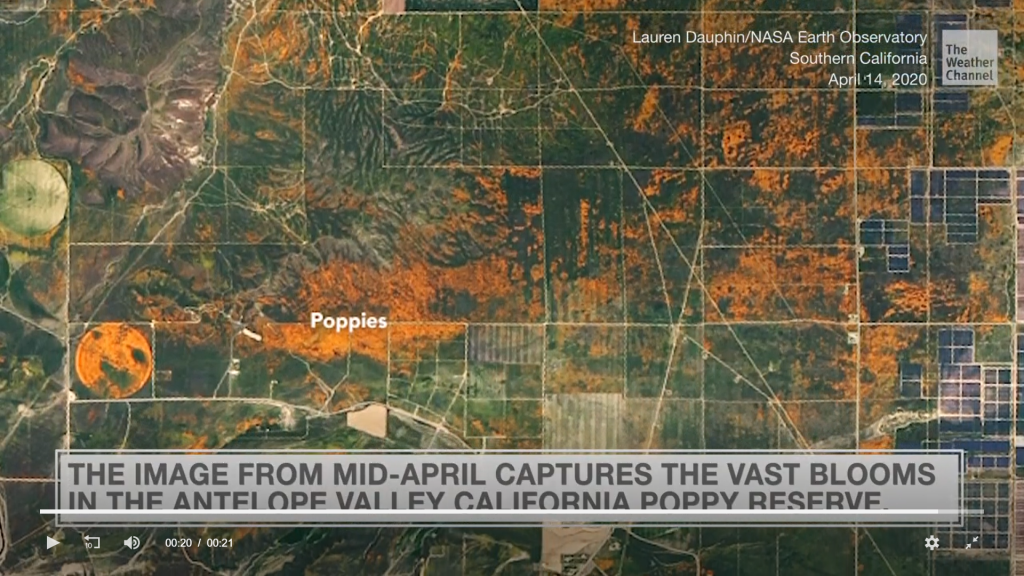
https://weather.com/science/nature/video/nasa-satellite-spots-super-bloom-in-california
Don’t know if I’ll ever get to California to see them in person but I’m imagining the view is spectacular.
WildeHerb is a collection of wild herb and wildflower sightings.
An awesome bloom so big it was seen via satellite!
https://weather.com/science/nature/video/nasa-satellite-spots-super-bloom-in-california
Don’t know if I’ll ever get to California to see them in person but I’m imagining the view is spectacular.
Check it out, North Dakota to the rescue!
Sunflowers are blooming brightly in North Dakota!
Some fields are reported as 80-90% in full bloom while other fields of planted sunflowers are just getting going.
At any rate the photos look lovely. Being there in person would be awesome!
WOW!
That’s all I can say. Go to the Stonehedge celebration link below (it’s safe!) and scroll down to see the field of poppies near Kidderminster, UK. The other pics are nice too, but I wish I could have been there in person to see these gorgeous red poppies:
We don’t get enough sun for growing poppies and other summer-loving flowers here on the mountain ridge. I guess that’s what you get for planting a house in the forest.
Totally appreciate the cooling effect of the shade though. 🙂
When flowers make the headline news, we smile! Especially at this time of year when winter is dragging on.
Last night we were blessed with 3 inches of snow up here on the mountain ridge in Central PA. More snow is promised for this weekend, so maybe that’s why I’m feeling a little extra Spring Fever after watching this video of Golden Poppies blooming in Southern California!
How lovely! We don’t have many mass bloomings here in the East…or do we?
Can’t wait to see some Spring flowers blooming in this part of the country!
The Spring Nor’easter has dumped quite a lot of snow in the Northeast USA. Records will be broken for the amount of snowfall in many places for this second day of Spring.
In Central Pennsylvania, at least up here on our mountain ridge, we’ve measured 12 inches and the snow is still falling but tapering off.

Way different than the 2 – 5 inches forecast yesterday.
Guess some Atlantic winds blew harder than expected.
Many places to our south bore the brunt of the storm and racked up more than a foot of snow. That’s a lot for locales not used to this upstate New York weather!
The temps are predicted to be in the low 40s for highs in the day and lows in the 20s at night for the next few days. The snow on the ground will become compacted before it lifts out of here.
And…for the hellebores? They’ll be ok. Hellebores like the cold and the snow has an insulating effect. We’ll keep a watch on how they’re doing.
As I let the dog out in the backyard right then I knew a flock of Canada Geese was heading home on their Spring migration. I heard them first making quite a racket so I looked up and was overjoyed to see a huge V-formation of these impressive flyers. Spring!
A little later in the day I went outside to enjoy the fresh air. It was a gorgeous day yesterday with a pretty, deep blue sky.
Caught some really cool looking cloud formations with the sun bursting through. Kinda like how I’m feeling now!
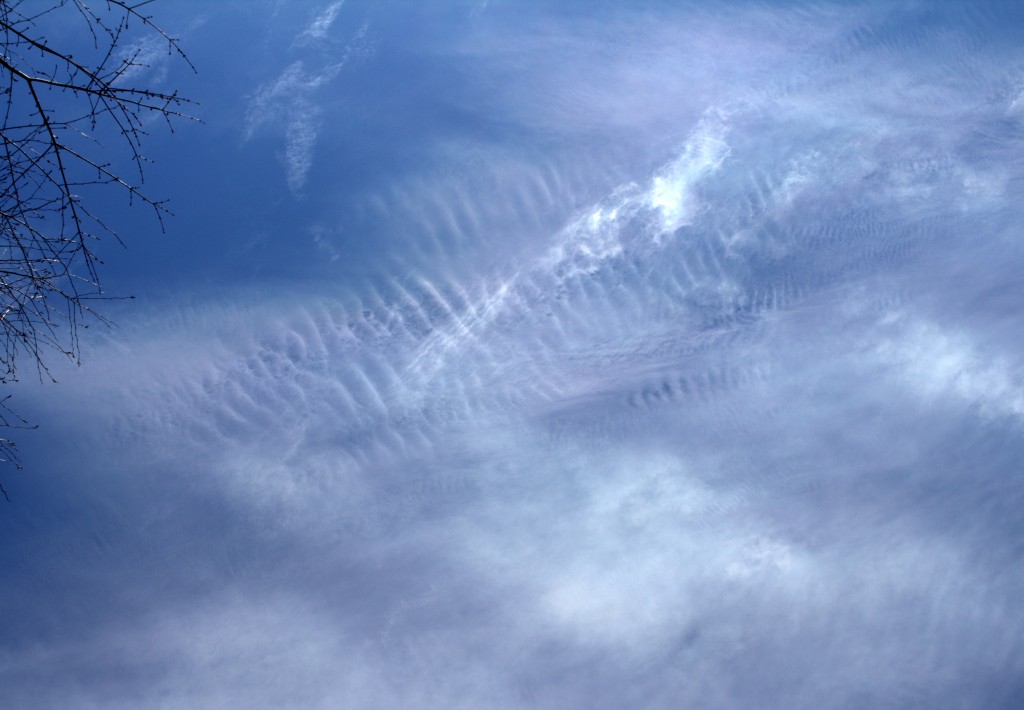
Even though the chatter in the clouds foretold the winter storm that is on our doorstep, I didn’t let that ruin my day. This sunshine felt amazing although the temp wasn’t very warm.
The coolest looking blue berries drew my attention to this weedy plant the first time I saw it when taking a walk near the Conestoga Creek. I was reminded of that Autumn day trip to Lancaster County, Pennsylvania a number of years ago when I recently spotted the same kind of plant scrambling along a cement bridge in Snyder County, PA.

Right away I could see its vine-like nature and that its leaves were triangular. The vine had climbed from a stream bank up and over the top of the bridge and down onto the guard rail.
The vine appeared to be growing well and it seemed to be liking its sunny spot very much as many small white flowers were present.
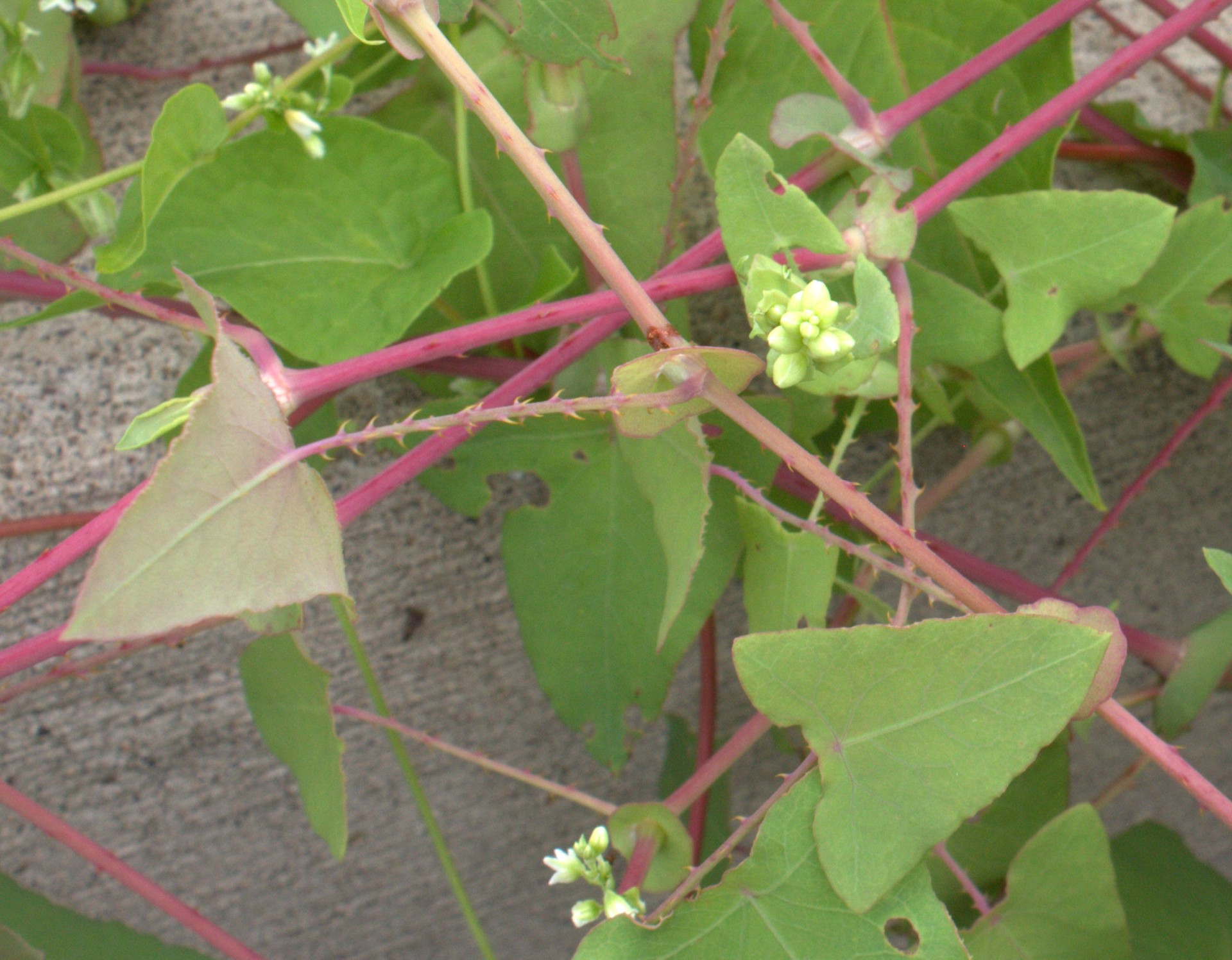
Triangular leaves and pink stems with thumb-tearing spikes. Don’t try to weed out this plant without a sturdy pair of gloves on your hands!
Driving around the countryside you have to keep your eyes open because you never know what you’ll see. Recently, we saw a momma deer crossing the road with her two fawns, a few other deer here and there, a bald eagle sitting up high in a tree, and for me a new plant. One that I hadn’t seen before in real life.
We slowed down to look at a covered bridge and then stopped to take a few pictures. Right there next to the berm that used to be the old road leading to the bridge were a few blooming lilies. They were about 30 feet away from the bank of the stream that the bridge spanned.
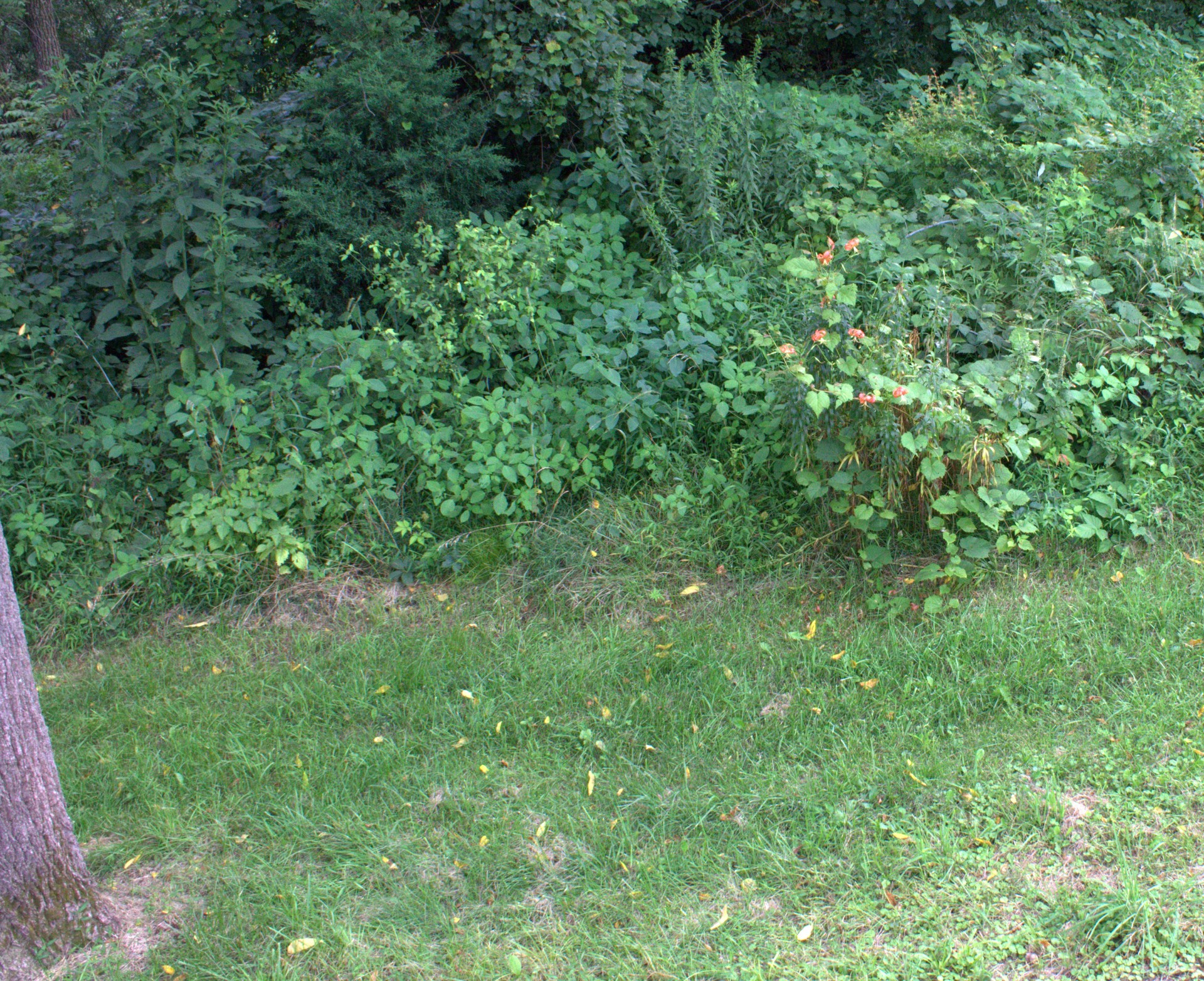
I recognized the Turk’s Cap Lily, Lilium superbum, from a distance, or at least I thought that’s what it was by the way the orange petals were swept back. I needed a closer look to be sure of the identification. What was the greenery like and how did the flowers look close up?