Posted on 29 March 2007 by wilde
Purple Dead Nettle, Lamium purpureum, is another very-low-growing plant that flowers in early Spring.
Characteristics of purple dead nettle include the fact that it is one of the first creeping plants to start growing in Spring. Passing by the plant one can look down and miss the flowers that are tucked under the foliage on erect stems.
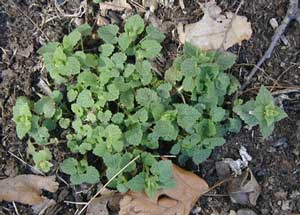
Looking down on purple dead nettle you can totally miss the flowers!
The toothed, opposite leaves are somewhat rounded and have a crinkly appearance due to heavy leaf veining. Leaves have longer stalks when found lower on the stem.
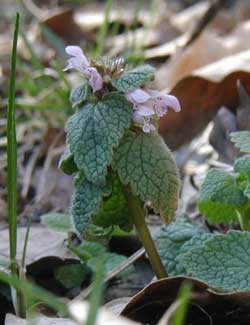
Upper leaves hide the lavender flowers that sprout from leaf axils.
Flowers of purple dead nettle are irregular in shape with two lobes on the lower lip. Light lavender or lilac-colored blossoms have spots or lines of purple.
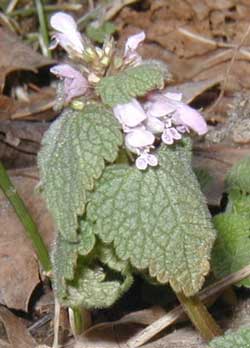
Irregular in shape the purple dead nettle flowers are lilac in color.
Speaking of lilacs, the lilac trees have broken out their winter buds.
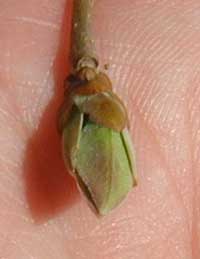
You can see how the lilac bud’s tough exterior protected the newly formed greenery.
I don’t remember if these lilacs were purple or white-flowered varieties. Since being transplanted a couple of years ago neither has bloomed, so I hope this year that one of the lilacs will surprise us.
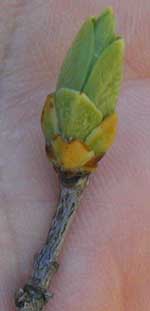
Winter lilac buds are open now to let the foliage grow.
Filed under: Vegetable
No Comments »
Posted on by wilde
Spring at last! Here in the Northeastern United States the outdoor temperature is starting to agree with the calendar.
A last hurray by Winter was about 7-8 inches of snow two weeks ago after some very cold temperatures in February. Today is expecting a mix of sun and clouds and high temperatures in the 60s. Time to open the windows and doors for a breath of fresh air!
Tulip greenery is pushing through the composted leaves used as protection against the harsh winter weather. A blast of warm temperatures a couple weeks ago started the tulips on their spring journey, so now the green tops are about 6 inches out of the ground.
Song birds are becoming more active. We watch them chase each other among the trees and wonder how they can twist and turn through the air so quickly. I suppose the males are chasing after the females, but it’s really hard to tell who’s chasing whom. The juncos are still here, but probably not for long before they fly back to Argentina. It’s nice to see bluebirds again!
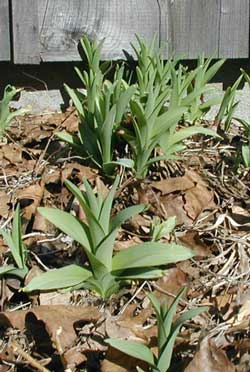
Next to the house we have lilies sprouting. Notice the light green foliage with one leaf being sheathed by the previous one. Flowers arise on separate stalks.
Day lilies sprouting in very early spring.
Lamb’s ear rosettes from last year are becoming more noticeable now. Lamb’s ears get their name from the soft, downy leaves of the first year plant. The crowded rosettes will be transplanted to other areas so they will have room to grow into two to three feet tall plants.
Beautiful magenta lamb’s ear flowers will brighten the flower gardens this summer.
Filed under: Animal, Vegetable
No Comments »
Posted on 26 March 2007 by wilde
The very earliest blooms are miniscule and usually borne on creeping stems or plants that wind their way through lawns and roadside gravel. Most of us completely ignore these little plants and tiny flowers because they are so small.
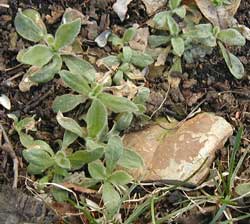
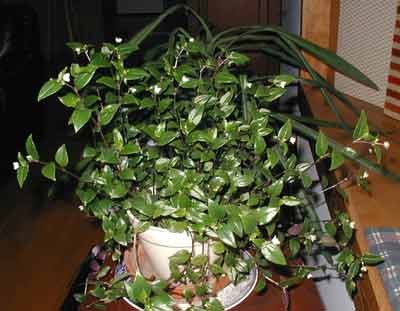
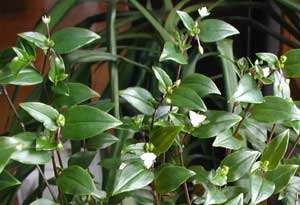
Chickweed growing among the gravel on the side of the lane.
Common chickweed (Stellaria media) is found throughout our area - the Northeastern United States and particularly Pennsylvania - and can be found blooming for much of the growing season.
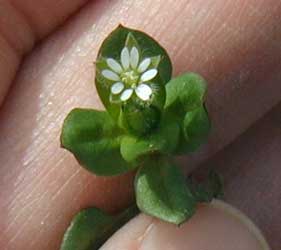
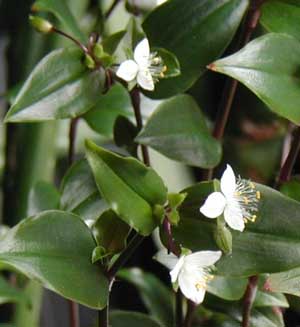
Chickweeds have tiny flowers that are so deeply cut it appears that the blossom has ten petals, when in fact it has five. The little white flowers look like they have pairs of long white petals.
The sepals are longer than the petals in common chickweed and have a fuzzy appearance.
Long, green sepals and an apparent 10 white petals of common chickweed.
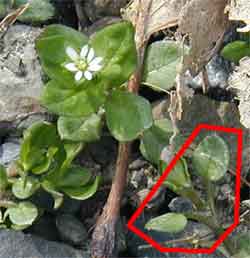
This particular chickweed is distinguished from other chickweeds by its long leaf stalks, or petioles.
Long-stemmed leaves are an identifying characteristic of Common Chickweed.
As you take a stroll around your neighborhood, look down! You might find a few of these weeds already blooming.
Filed under: Vegetable
No Comments »