Faded Cone Flowers and a Blue Morning Sky

Posted on 20 August 2006 by wilde

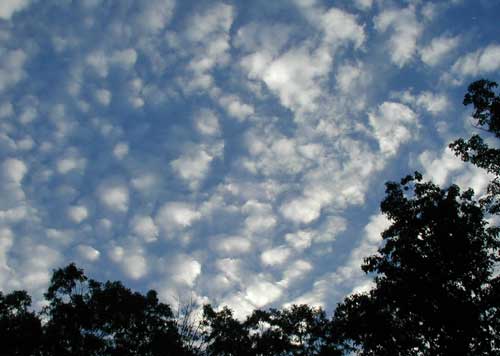
The sun glinting off the clouds drew me outside this morning. I think I’ll use this photo as a desktop background for a while. Just breathe in the cool morning air!

Beautiful morning sky in the mountains of southcentral Pennsylvania.

Beautiful morning sky in the mountains of southcentral Pennsylvania.

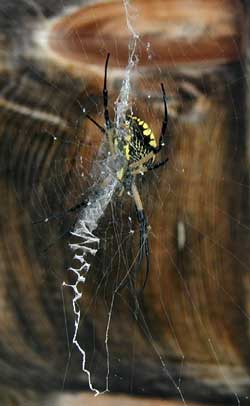
I can’t seem to catch this garden spider on the other side of her net. I’m sure many people kill this lovely Argiope spider because of its scary size, but I’ll leave her to catch lots of other visitors that we don’t want chewing on the plants or buzzing around our heads.

The yellow and black orb spider tends her web.

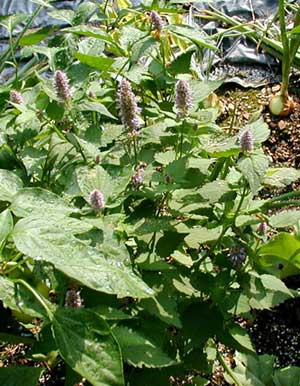
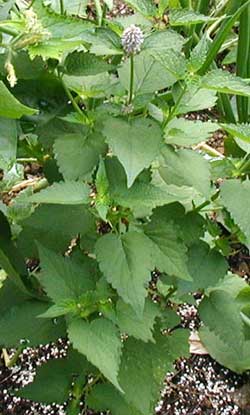
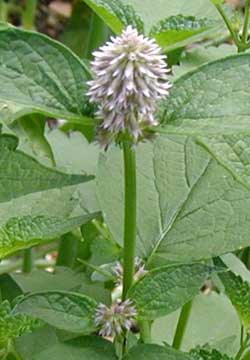
The giant blue hyssop is doing well, even though it was squeezed into the garden. There must be a dozen flowering tops now.

Giant blue hyssop flowering tops.

Giant blue hyssop flowering tops.

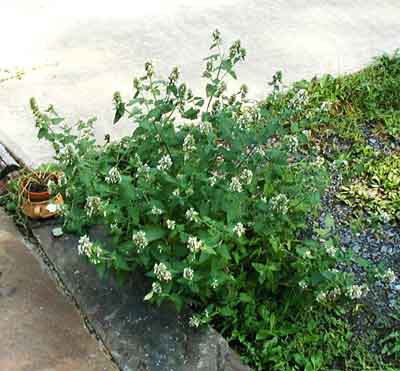
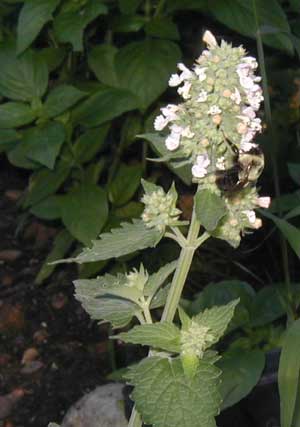
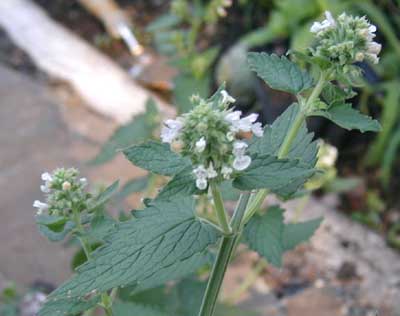
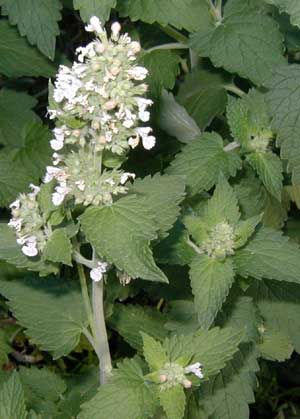
The catnip at the end of the flagstone walkway is flowering nicely. It draws the honeybees and bumblebees, and the cats!

Terminal flowers of catnip are blooming.

Terminal flowers of catnip are blooming.

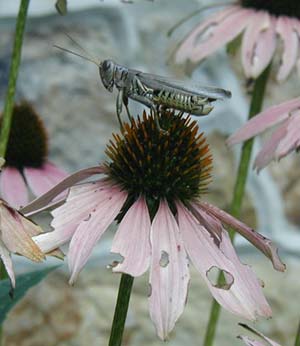
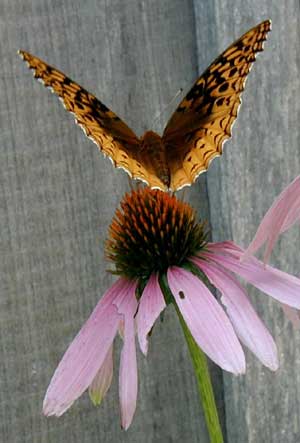
The purple cone flowers are fading quickly. The color is draining from the flower petals and grasshoppers and such are nibbling on the petals and leaves.

Grasshopper shopping for a little lunch among the purple cone flowers.

Grasshopper shopping for a little lunch among the purple cone flowers.

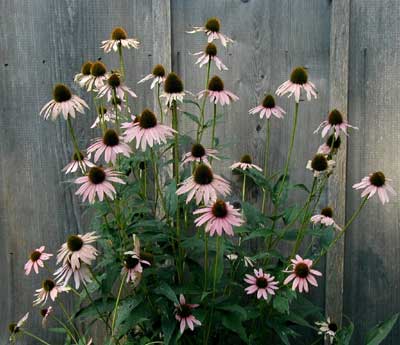
Faded purple cone flower is now a light pink.

Faded purple cone flower is now a light pink.

The cone flower stems are still erect because we used a small tomato cage to contain them. In Spring before the Echinacea put out a lot of growth, we put a cage over this cone flower plant. As the plant grew the stems were guided inside the cage and pretty soon the leaves covered the cage to hide it from view. The cage supported the stems as they gained height and really showed the coneflowers at their best.

We’ll leave the seed heads on the purple cone flowers over the winter. It seems to be a favorite stopping place for the goldfinches.

Sorrel and Giant Blue Hyssop

Posted on 10 August 2006 by wilde

I had been wanting to try out some new herbs this summer, so I planted quite a number of them in flats with some great potting soil. Being surrounded by trees the sun that we do have tends to move around a lot from the morning to the afternoon. I kept moving the flats so they would feel the heat of the sun. Perhaps the shifting of the soil in the tray was not appreciated as only a couple seeds sprouted. Perhaps I purchased a bunch of crappy seeds. Anyway, having waited three weeks time, I figured no other seeds were going to sprout so I dumped the flats into the vegetable garden between a couple rows of Walla Walla onions.

Two plants emerged from this planting disaster — sorrel and giant blue hyssop.

Sorrel, Rumex acetosa, actually belongs in the vegetable garden. Its leaves attain great size and serve as a nice addition to garden salads. The great oval shaped leaves are a foot long or longer and at least a few inches wide. One leaf is quite enough to add some zest to a lettuce salad or to place on a couple sandwiches.

Sorrel leaves ready to pick for a salad.

Giant Blue Hyssop, Agastache foeniculum, is also called anise hyssop because of the anise flavor of its leaves and flowers. I enjoyed adding a couple blossoms to a tomato and cucumber vinegar salad.

Young anise hyssop just starting to flower.
Flowering top of giant blue hyssop.

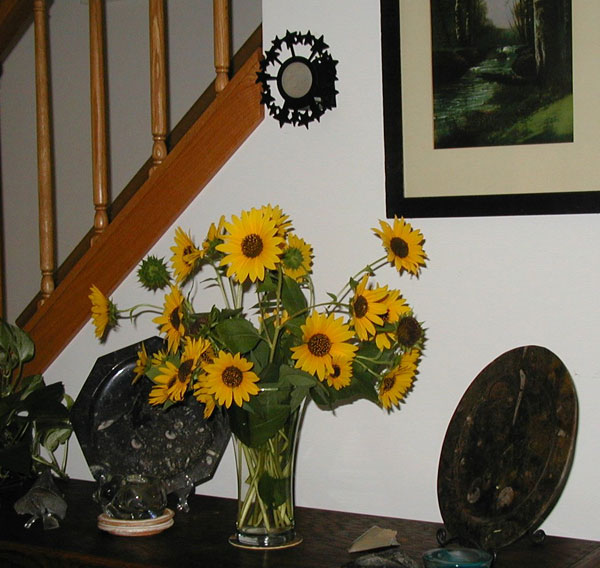
Here’s a beautiful bouquet of sunflowers that we brought in from out back. May your day be as sunny!

Sunny happy sunflowers!

Sunny happy sunflowers!

No Hornworms on Stevia

Posted on 6 August 2006 by wilde

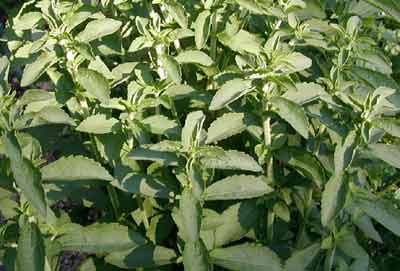
Beautiful stevia. Nary a leaf on the Sweet Leaf plant is touched by munching insects.

Stevia or sweet leaf plant with leaves intact.

Stevia or sweet leaf plant with leaves intact.

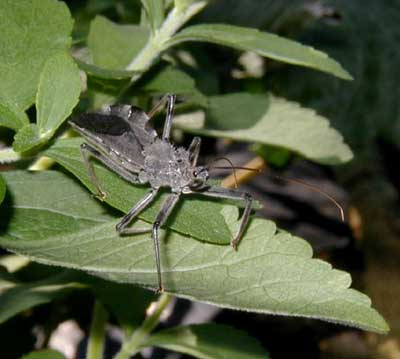
Predatory insects may lie and wait among the symmetrical leaves of Stevia. Ambush predators, that’s what they are!

Wheel bug waits on stevia leaf for an unsuspecting passerby.

Wheel bug waits on stevia leaf for an unsuspecting passerby.

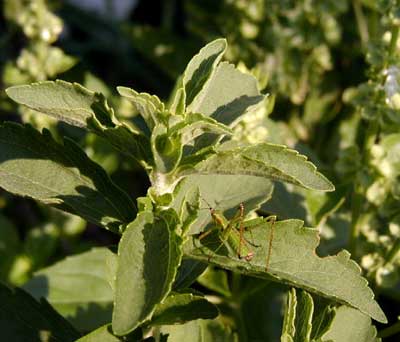
Stevia is not completely resistant to pests, but not many pests appreciate Stevia’s extremely sweet taste.

Young grasshopper on stevia leaf.

Young grasshopper on stevia leaf.

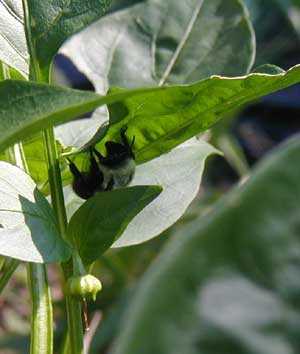
Inspecting the vegetable and herb gardens this morning I came across this still bumblebee. He was hanging on to the underside of a leaf from the pepper plant, near the basil he must have supped from the previous day. Those tiny little crampons on his feet just held him in place, all night? The warmth of the morning sun had not yet shone on his boudoir, so he must have been still sleeping!

Sleeping bumblebee under a pepper leaf.

Sleeping bumblebee under a pepper leaf.

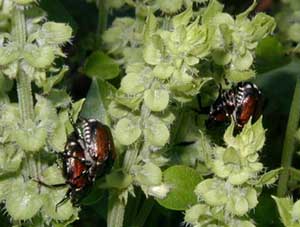
The season is about done for the Japanese beetles. They have been terrorizing my peach trees, ornamental maple tree, sassafras trees, and dahlias, too. This morning I captured quit a few from the basil flowers. In they went into a jar of soapy water. Held the jar below the branch and knocked them off. Sometimes they flew away, but the majority was captured.

Japanese beetles on basil flowers.

Japanese beetles on basil flowers.

A family of phoebes has been helping me combat the hordes of flying beetles and bugs this summer. Their nest was built atop a lamp that is attached to the house near a garage doorway. They have a habit of sitting at one spot on a branch or post, flying off to catch an insect in mid-air, and then flying back to the same spot on the same branch. Maybe they choose branches with a great view of the insect action, or maybe just high enough to keep the cats in site?

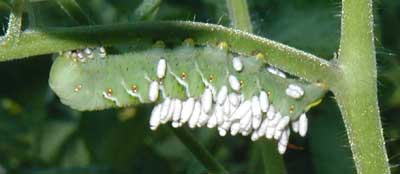
Another pest that we don’t mind seeing around here is the braconid wasp that takes care of a nasty garden pest. Tomato Hornworms are really bad for the tomato eater. These caterpillars grow very quickly and can decimate a tomato or pepper plant very fast! Not only do they eat the leaves, I am mean the entire leaf, they eat the fruits. Your tomato plants will look like sticks if these nasty hornworms are not taken care of. Nature comes to the rescue in the lifecycle of the Braconid wasps. Females lay their eggs in the tomato hornworm caterpillar from which they take nourishment. The hornworm stops feeding and soon dries up to a little black reminant of itself.

Wasp eggs on tomato horn worm on a tomato plant.

Wasp silk cocoons laid in tomato horn worm on a tomato plant.

To combat the hornworms we pick off any caterpillars that do not have wasp parasites. The caterpillars that are infested with the wasps are left alone to encourage the growth of more wasps. This tactic should help to shift the balance of power to the wasps.